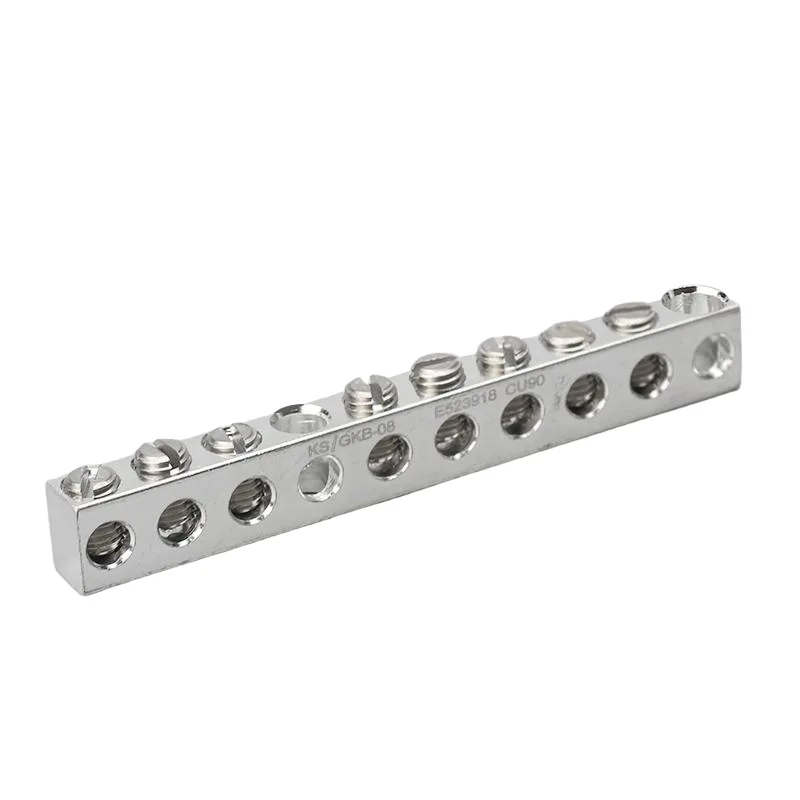
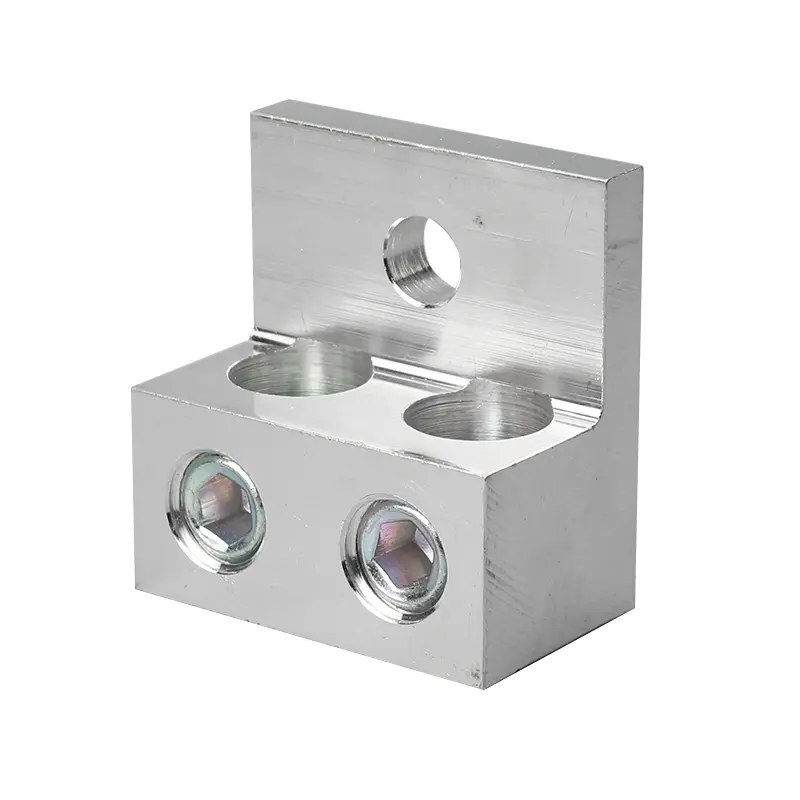
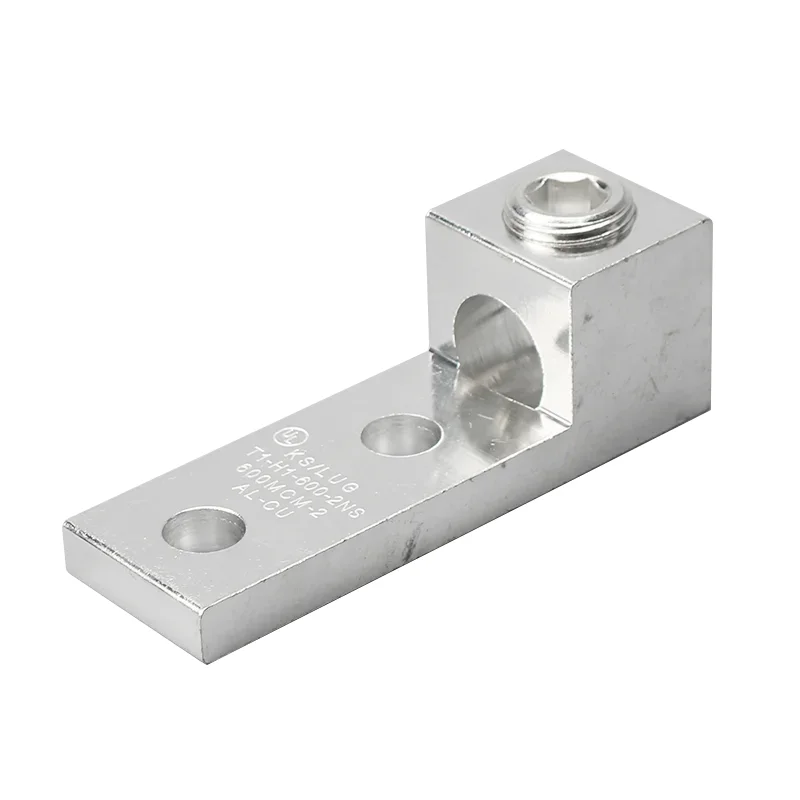
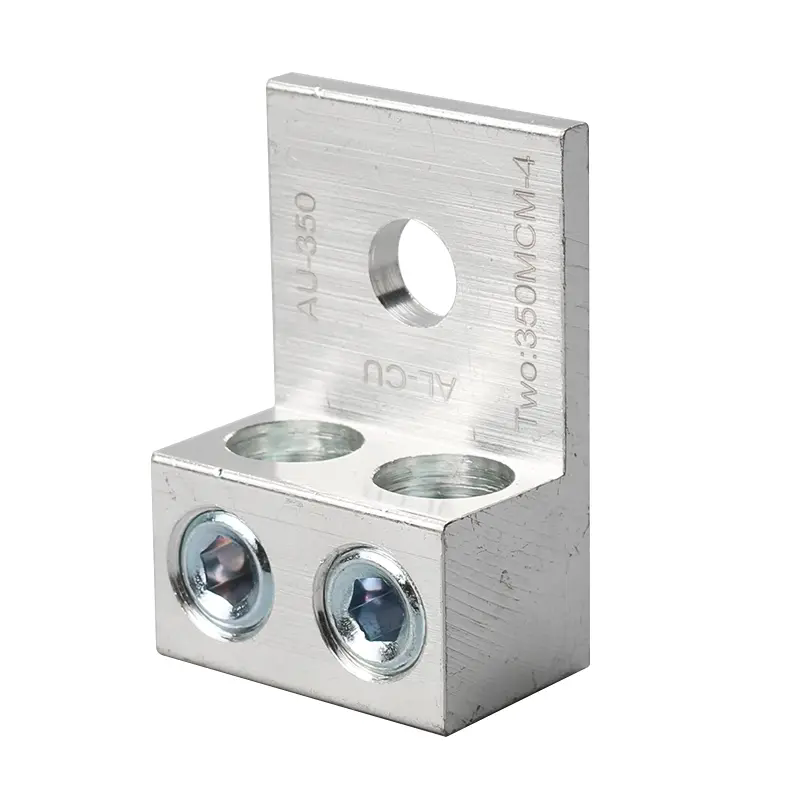
In the intricate world of electrical panelboards and load centers, two terms frequently surface that are crucial for safety, functionality, and system design: Main Lugs and Main Breaker Lugs. While they may sound similar, confusing them can lead to incorrect specifications, potential safety hazards, and failed inspections. With over two decades of experience in the electrical components industry, our team at Wenzhou Kangshuai Electronic Co., Ltd. is intimately familiar with the nuanced differences between these essential components.
This guide will delve deep into their definitions, applications, technical parameters, and the critical factors that determine when to use one over the other. Understanding this distinction is fundamental for electricians, engineers, contractors, and procurement specialists who specify and work with Panelboard Lugs daily. Our factory's commitment to precision manufacturing ensures that every lug we produce meets the highest standards for connectivity and safety, a principle that guides our explanation here.
In the realm of electrical distribution systems, understanding the precise function and application of a Main Lug Only panel is fundamental for safe and compliant installations. As a cornerstone component manufactured with precision at our factory, Wenzhou Kangshuai Electronic Co., Ltd., a Main Lug Only panel represents a specific design philosophy focused on distribution rather than primary protection. At its core, an MLO panel is an electrical enclosure housing a busbar system and provisions for multiple branch circuit breakers, but it deliberately omits a main overcurrent protective device (OCPD) within its assembly.
The "main lugs" are precisely the high-amperage, robust termination points where the incoming feeder conductors from an upstream source are physically and electrically connected. These conductors are already protected by a separate disconnect and circuit breaker, which could be located in a meter-main combination unit, a switchboard, or a remote panel that serves as the service equipment for the facility. The primary and sole role of the MLO panel is to act as a centralized distribution point, taking a single, large-capacity power feed and efficiently dividing it into numerous smaller, protected circuits for lighting, outlets, machinery, or other loads. Our decades of experience in producing these critical connection interfaces, our Panelboard Lugs, have taught us that their reliability is non-negotiable, as they bear the full continuous current of all downstream loads combined.
To fully comprehend an MLO panel, one must visualize the electrical pathway. Power enters the enclosure through a conduit or cable. These unbroken service or feeder conductors—typically large-gauge copper or aluminum—are routed directly to the main lugs, which are securely mounted on, and form the beginning of, the panel's busbar system. There is no interrupting switch or fuse in this path within the box. The lugs themselves, which our factory meticulously machines and plates, are the gateway. Once terminated, the current flows from the lugs into the main busbars, which are usually made of tin-plated copper or aluminum and run vertically (in a residential panel) or horizontally through the enclosure.
These busbars have standardized connection points where individual branch circuit breakers snap on. Each breaker then protects its dedicated circuit. This architecture means the entire panel's load, from a single 15-amp lighting circuit to the cumulative draw of twenty such circuits, passes through those main lugs. Therefore, our manufacturing specifications for Panelboard Lugs in MLO applications prioritize several key factors beyond basic conductivity, which we will explore in a detailed list.
The use of MLO panels is widespread in scenarios where electrical distribution is separated from service entrance protection. In a typical single-family home, the main service disconnect might be a 200-amp breaker in an outdoor meter-main combo. From there, a set of feeders runs to a sub-panel inside the garage or basement, which is an MLO panel. This sub-panel powers the home's branch circuits. In commercial and industrial settings, the application scales up.
A large facility might have a 4000-amp main switchboard. From this, several 400-amp or 600-amp feeders run to distant MLO distribution panels located near clusters of loads, such as on different manufacturing floors or office wings. This "distribution panel" approach reduces voltage drop and simplifies wiring. Another specialized application is in generator transfer setups. The critical load sub-panel (fed from an automatic transfer switch) is often an MLO panel. Its upstream protection and disconnect are handled by the transfer switch and the main service panel.
Our role is to provide the Panelboard Lugs that form the reliable heart of these diverse MLO installations, ensuring that wherever power needs to be cleanly and safely divided, the connection point is up to the task. Our engineering team works closely with panel builders to customize lug configurations for these varied and demanding environments.
In contrast to the distributed protection model of MLO panels, a Main Breaker Lug panel embodies the principle of integrated control and safety. This type of panel combines the functions of service entry, primary overcurrent protection, main disconnect, and circuit distribution into a single, self-contained enclosure. The "main breaker lugs" are specifically the termination points located on the line side (utility side) of the integrated main circuit breaker.
Incoming service conductors from the utility meter or a transformer connect directly to these lugs. The integrated main breaker—a large, thermally-magnetic or electronic trip device—then provides the crucial functions of overload and short-circuit protection for the entire panel and serves as the emergency and maintenance disconnect for all power downstream. The load side of this main breaker is connected to the panel's busbar system, which then feeds the individual branch circuit breakers. This design means the panel itself is classified as "Suitable for Use as Service Equipment" (SUSE), a critical NEC designation. At Wenzhou Kangshuai Electronic Co., Ltd., we manufacture the lugs that are integral to these main breaker assemblies. Our understanding of the dual role—as both a high-current termination point and a critical part of a safety device's current path—informs every aspect of our production process for these Panelboard Lugs.
The electrical pathway in an MBL panel has a deliberate and protected interruption point. The utility power enters the enclosure and is immediately routed to the line-side lugs of the main breaker. These lugs are part of the breaker's fixed, internal assembly. From these lugs, the current travels through the breaker's internal contacts, sensing elements, and trip mechanism. Under normal conditions, the contacts are closed, and power flows to the breaker's load terminals, which are connected to the panel's main busbars. If a fault (a short circuit) occurs anywhere downstream or if the total load exceeds the breaker's rating for a sustained period (an overload), the internal mechanism trips, forcefully opening the contacts and disconnecting all power to the busbars and every branch circuit. This integrated design offers a clear safety hierarchy.
The main breaker protects the busbars and the feeders to any downstream sub-panels. Each branch breaker protects its specific circuit wiring and load. The lugs on the line side of the main breaker are therefore the first point of contact for unprotected utility power. Their integrity is absolute, as any failure here—such as a loose connection causing arcing—would occur before the main breaker's protection and could lead to a catastrophic event. This is why our factory subjects the Panelboard Lugs destined for main breaker applications to even more stringent testing for thermal cycling and short-circuit withstand.
The MBL panel is the undisputed standard for residential, commercial, and light industrial service equipment—the point where the utility's responsibility ends and the building owner's begins. The National Electrical Code (NEC) Article 230 mandates requirements for service equipment, and a single main breaker providing the service disconnect is the most common and straightforward way to comply. In a house, it is the main panel in the basement or garage. In a small commercial building, it might be a 400-amp panel in a utility room. Beyond being the service disconnect, its integrated nature offers significant safety and convenience benefits for electricians and first responders: there is one, clearly labeled switch to kill all power in the building (except for any separately derived sources). For panel builders sourcing components, using a pre-assembled main breaker unit with our integrated Panelboard Lugs ensures a UL-listed assembly, simplifying their own listing process.
Our factory supports these builders by providing not just components, but also the test reports and certification documentation that attest to the assembly's compliance with standards like UL 67 (Panelboards) and UL 489 (Molded-Case Circuit Breakers). The reliability we build into every lug supports the overarching safety function of the entire main breaker panel, a responsibility we take with the utmost seriousness at Wenzhou Kangshuai Electronic Co., Ltd.
While both MLO and MBL panels serve to distribute electricity, the presence or absence of an integrated main overcurrent protective device creates profound differences in their operation, installation, safety profile, and regulatory treatment. These differences are not merely academic; they dictate real-world practices for electricians, inspectors, engineers, and facility managers. Drawing from our extensive experience supplying Panelboard Lugs for both configurations, we at Wenzhou Kangshuai Electronic Co., Ltd. can articulate these distinctions with practical clarity.
The following detailed comparison table and subsequent analysis break down these critical areas. Understanding them is essential for specifying the correct panel type and ensuring a safe, code-compliant installation that performs reliably over its lifetime. Our commitment is to provide components that meet the distinct demands of each application, whether it's the pure power-transfer role of an MLO lug or the protected-entry role of a main breaker lug.
| Aspect of Comparison | Main Lugs Only (MLO) Panel | Main Breaker Lug (MBL) Panel |
| 1. Primary Function & Role in System | Pure Distribution Node. Its sole function is to divide a single, already-protected power feed into multiple branch circuits. It is a middleman in the power chain. | Service Entrance & Integrated Distribution. Functions as the demarcation point between utility and premises wiring, providing primary protection, disconnect, and distribution in one unit. |
| 2. Location of Overcurrent Protection for Panel Feeders | Exclusively Upstream. The conductors feeding the MLO panel are protected only at their source—the upstream breaker. The section of cable from that breaker to the MLO lugs has no local protection. A fault on this cable would rely on the upstream breaker to clear it, which may have a higher trip setting due to coordination needs. | Integrated and Local. The main breaker provides direct overcurrent protection for the service conductors exactly where they terminate. A fault at the lugs or immediately downstream is cleared by the main breaker itself. |
| 3. Main Disconnect Location & Emergency Procedure | Remote. To de-energize the entire MLO panel for maintenance or an emergency, personnel must locate and operate the upstream disconnect. This could be in a different room, on a different floor, or in a locked utility area, potentially causing dangerous delays. | Local and Immediate. The main disconnect is on the panel face. In an emergency, anyone can quickly identify and throw the main breaker to kill all power in the panel and its downstream loads. This is a critical life-safety feature. |
| 4. NEC Code Requirements & Labeling | Must be marked "Main Lugs Only" or equivalent. The NEC requires this marking to alert personnel that there is no disconnect within the enclosure. It is not SUITABLE FOR USE AS SERVICE EQUIPMENT unless specifically listed and configured as such (rare). Its installation is governed by rules for sub-panels and feeders (NEC Articles 215, 408). | Marked "Suitable for Use as Service Equipment" (SUSE). Must comply with all service equipment rules in NEC Article 230, including working space, clearances, and grounding/bonding requirements. The main breaker rating is the service rating. |
| 5. System Coordination & Selective Tripping | Enables better coordination. An engineer can selectively size the upstream feeder breaker to be larger than the MLO panel's bus rating to allow for future load growth, or to coordinate tripping so a branch fault doesn't take out the main feed. The MLO panel's "lack" of a main is a feature for system design flexibility. | Coordination is with utility supply. The main breaker's trip characteristics must coordinate with the utility's protective devices upstream. Downstream coordination is between the main breaker and the branch breakers. A severe branch fault could trip the main, causing a total blackout of the panel. |
| 6. Cost & Value Analysis | Lower initial panel cost. The panel itself is typically less expensive because it lacks the main breaker assembly. However, this does not account for the necessary cost of the separate upstream disconnect equipment. Total installed cost may be similar or higher depending on the run to the upstream device. | Higher initial panel cost, but all-in-one value. The panel cost includes the main breaker. For new construction or a single service point, this is often the most economical and straightforward solution, bundling all required functions. |
| 7. Physical Space & Layout Within Enclosure | Maximizes space for branch circuits. With no large main breaker taking up positions, an MLO panel can often fit more branch circuit breakers in the same physical enclosure size. This is a major advantage in retrofit or space-constrained applications. | Space shared with main device. The main breaker occupies space, typically the top two to four positions in a residential panel. This reduces the number of available spaces for branch breakers, sometimes necessitating a larger panel or a sub-panel. |
| 8. Fault Current Withstand Rating | Dependent on upstream protection. The MLO panel and its lugs must have an Interrupting Rating (IR) or Withstand Rating (SCCR) sufficient for the available fault current at its location. This rating is independent but must be >= the upstream breaker's interrupting rating. | Integrated rating. The main breaker's interrupting rating (e.g., 22kA, 65kA, 100kA) defines the panel's fault current capability. The lugs and bus are tested as part of this assembly to withstand the magnetic forces and heat of a fault until the breaker clears it. |
The safety implications stem directly from the "local disconnect" difference. In a commercial facility, an electrician working on an MLO sub-panel must rely on a lockout/tagout (LOTO) procedure at a remote location. If that disconnect is not under their sole control (e.g., it powers other loads), the risk is higher. With an MBL panel, the disconnect is right there, visible and controllable. From a fire safety perspective, an arc-fault at the main lugs of an MLO panel could be more severe because the upstream breaker may have a longer clearing time (due to intentional time-delay for coordination) than a main breaker would for a fault at its own terminals. Practically, troubleshooting is different. In an MBL panel, if all power is lost, the first check is the main breaker. In a system with an MLO panel, a total loss requires checking the remote upstream device.
Our factory designs our Panelboard Lugs to mitigate failure risks in both scenarios, but the system architecture dictates the safety protocols that must be followed. Ultimately, the choice between MLO and MBL is not about which is universally "better," but about which is correct for the specific electrical system design. Our expertise ensures the lugs at the heart of either choice are engineered for optimal performance and safety in their intended role.
Selecting the appropriate panel configuration—MLO or MBL—is a critical decision that impacts safety, cost, functionality, and compliance. It is not a subjective preference but a systematic determination based on the project's electrical one-line diagram, code requirements, and practical constraints. At Wenzhou Kangshuai Electronic Co., Ltd., our technical support team guides customers through this decision process daily, as it directly influences the type of Panelboard Lugs and assemblies they need to order from our factory. The following comprehensive, step-by-step guide is built on our two decades of industry experience and is designed to help engineers, contractors, and panel builders make an informed, correct choice.
This is the fundamental first question. Draw or review the system's single-line diagram. Ask: Is this panel the FIRST point of connection after the utility meter or transformer secondary?
Our Note: This step seems basic, but misapplication here is a common code violation. We've seen projects delayed because an MLO panel was installed where service equipment was required. Our documentation for Panelboard Lugs always clarifies their intended use in SUSE or non-SUSE equipment.
Local amendments to the NEC and specific utility company rules can override general guidelines.
Our Role: We ensure our Panelboard Lugs for both MLO and MBL applications carry the necessary UL listings (UL 486, UL 67) that are universally recognized by AHJs, removing one variable from your compliance checklist.
Beyond code minimums, consider the human factors of operating and maintaining the system.
Analyze the total installed cost, not just the component price.
Our Support: Once you've made your choice, our team at Wenzhou Kangshuai Electronic Co., Ltd. can provide precise specifications for the Panelboard Lugs required. For an MLO panel, we'll specify the standalone lug kit with the correct ampacity, wire range, and mounting style. For an MBL panel, we'll provide the integrated main breaker assembly or the specific lug components for the main breaker unit. Our goal is to make the final component specification the easiest part of your decision-making process, backed by our reliable manufacturing and expert technical data.
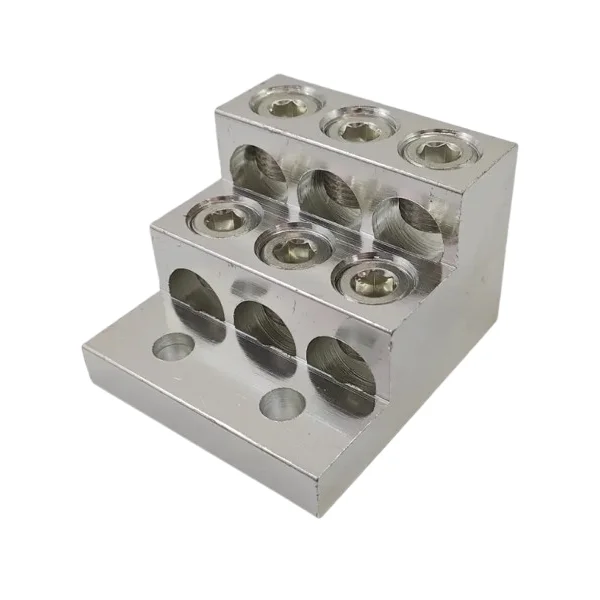
Whether for MLO or main breaker applications, the lugs themselves must be specified with precision. At Wenzhou Kangshuai Electronic Co., Ltd., we manufacture Panelboard Lugs to exacting standards, and we advise our clients to always verify the following parameters.
Providing detailed, accurate specifications for our Panelboard Lugs is a fundamental part of our service. It ensures compatibility, safety, and long-term reliability for every panel built with our components.
In summary, the difference between main lugs and main breaker lugs is defined by system architecture. Main Lugs Only (MLO) panels are connection points for downstream distribution, relying on an external disconnect and overcurrent protection. Main Breaker Lug (MBL) panels incorporate that critical protection and disconnect within the enclosure, making them suitable as service equipment. The choice hinges on the panel's role in the overall electrical system. As a leading manufacturer, Wenzhou Kangshuai Electronic Co., Ltd. supplies high-quality, reliable Panelboard Lugs for both configurations. Our expertise ensures that whether you are building a main panel or a sub-panel, the connection points—the very heart of power distribution—are engineered for maximum safety, durability, and performance. We stand behind every lug that leaves our factory, knowing it is a key component in a safe and efficient electrical system.
Ready to Specify the Right Lugs for Your Project? Don't leave connectivity to chance. Contact the experts at Wenzhou Kangshuai Electronic Co., Ltd. today for detailed product catalogs, technical datasheets, and personalized support in selecting the perfect Panelboard Lugs for your main lug or main breaker applications. Our team is here to ensure your designs are both code-compliant and built to last. Request a quote or consultation now.
Q: Can I add a main breaker to a main lug only panel?
A: Generally, no. Main Lug Only panels are manufactured and listed with a specific bus structure that is not designed to accept the addition of a main breaker internally. The enclosure is also not configured for it. To achieve this, you would need to replace the entire panel with a main breaker type or install an external disconnect breaker upstream, which essentially keeps the panel as an MLO fed from that new breaker. Always consult with a qualified electrician and the panel manufacturer's instructions.
Q: Which is safer, a main lug or main breaker panel?
A: Safety depends on correct application and installation. A main breaker panel provides a clear, immediate disconnect at the panel location, which is a safety benefit for maintenance and emergencies. However, an MLO panel fed from a properly sized and located upstream breaker is equally safe from an overcurrent protection standpoint. The potential safety risk arises if the upstream disconnect is not readily accessible or is improperly labeled.
Q: How do I know if my existing panel is MLO or has a main breaker?
A: Open the panel door (safely, and only if you are qualified). Look at the top of the panel where the service wires enter. If you see a large, single switch or breaker that all the other breakers are grouped below, and it is labeled "Main," you have a main breaker panel. If you see only a set of large terminal lugs with heavy wires attached, and no single switch above the branch breakers, it is likely an MLO panel. The panel cover should also be marked "Main Lug Only" if it is an MLO.
Q: Does a main breaker panel also have main lugs?
A: Yes, technically. In a main breaker panel, the incoming service conductors connect to lugs that are part of the main breaker assembly itself. These are the "line side" lugs of the main breaker. So, it has main breaker lugs. The term "main lugs" is typically reserved for the standalone lugs found in an MLO panel.
Q: Are the lugs themselves different between MLO and MBL panels?
A: They can be. While both must be rated for the system amperage, MLO lugs are often standalone components bolted to the bus. Main breaker lugs are integrated into the breaker's housing and design. The material and performance standards are equally high, but their physical form and mounting are specific to their application. At our factory, we manufacture both types to meet the distinct mechanical and thermal demands of their respective installations.