What is a Neutral Bar and Why It Matters
Aluminum Neutral Bars
Copper Neutral Bars
Why Choose Our Neutral Bars & How to Select Them
How is a neutral bar used in electrical systems?
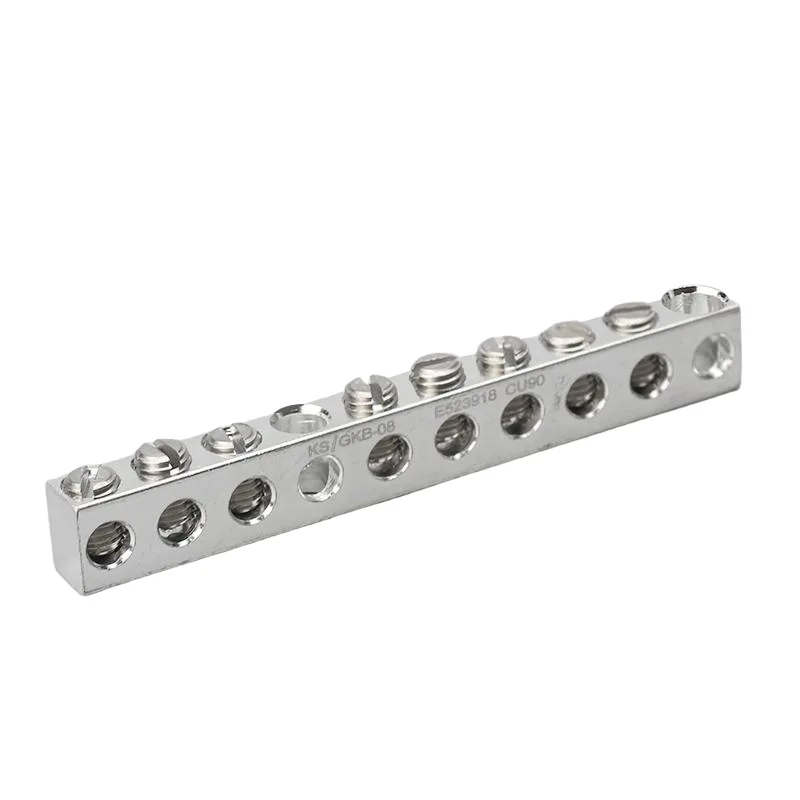
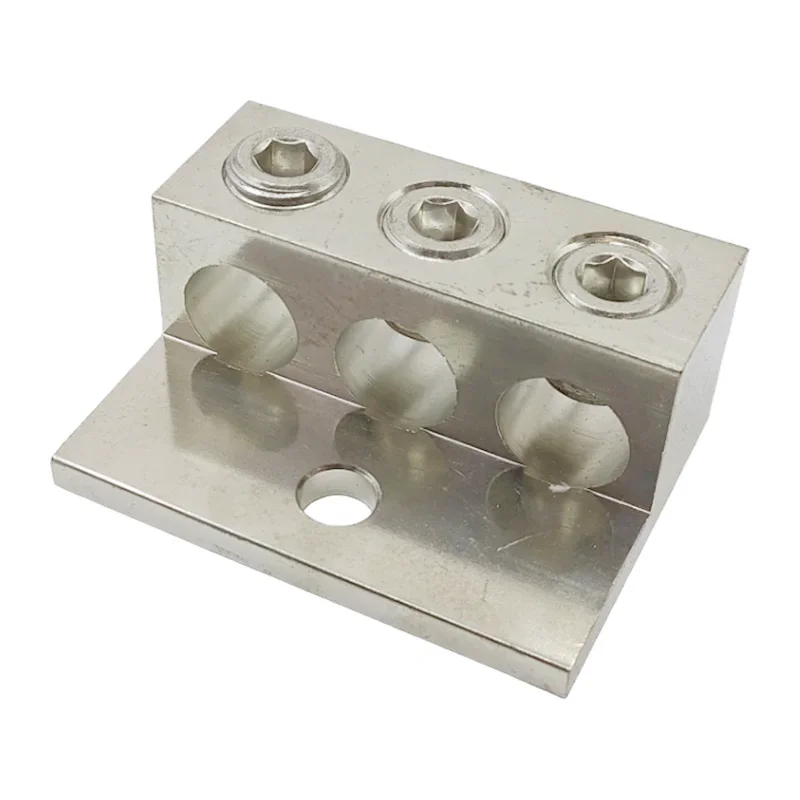
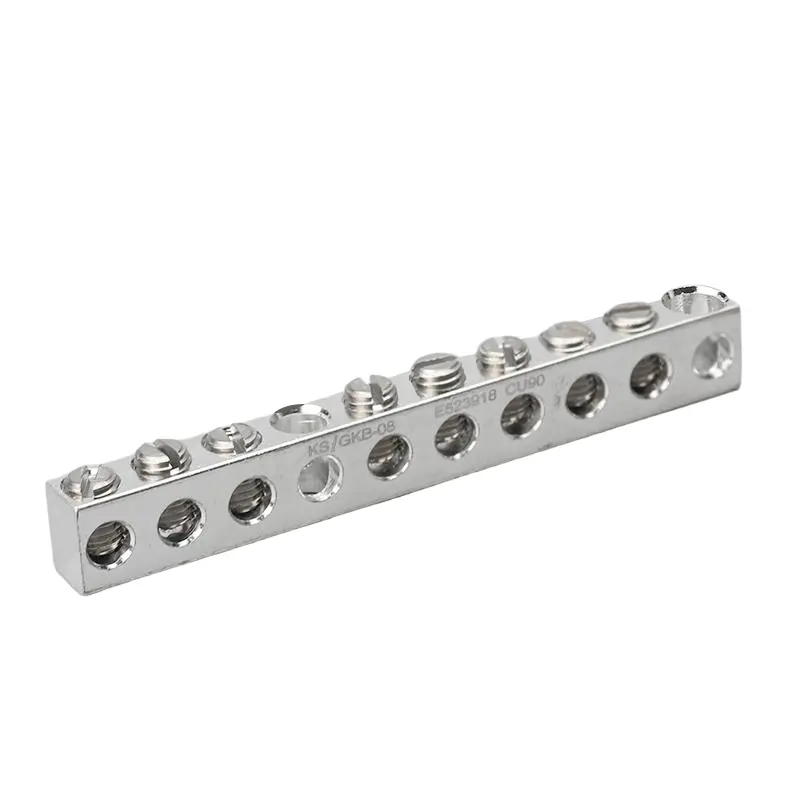
A neutral bar (also called a neutral bus, grounding bar, or neutral terminal bar) is a conductive strip installed within switchgear, distribution panels, control cabinets, or equipment enclosures that provides a common connection point for neutral or grounding conductors. It helps ensure that all neutral wiring and grounding wiring are consolidated, enabling safe return circuits and fault paths.

Why does its design, material, and layout matter?
The neutral bar must offer low electrical resistance to minimize voltage drop and heating under load.
It must support mechanical robustness (resist vibration, fatigue, thermal expansion).
It often must meet relevant safety and certification standards (e.g. UL, IEC) to be usable in commercial or industrial panels.
The layout and hole spacing, number of circuits, and conductor compatibility are critical for installation ease and flexibility.
What are the typical applications of neutral bars?
Electrical control panels and switchgear
Power distribution boards
Motor control centers (MCCs)
Renewable energy systems and combiner boxes
Data centers, automation cabinets

How do aluminum neutral bars compare to copper in performance and cost?
Aluminum is more cost-effective than copper and lighter, which reduces overall panel weight.
Many aluminum bars are dual-rated (suitable for use with both aluminum and copper conductors) when properly treated (e.g. tin plating)
Some in industry forums note that “AL is a much better choice… less expensive and much easier to make it work with both copper and aluminum wires.”
However, care must be taken with contact surfaces, corrosion control, and torque values to ensure long-term reliability.
Why choose aluminum neutral bars?
Cost savings per unit length, especially in larger panels
Weight reduction in enclosures
Good thermal behavior if properly designed
Dual-compatibility when surface-treated (tin plated or anti-oxidation coating)
What are key parameters and specifications of aluminum neutral bars?
Below is a typical specification table for a standard aluminum neutral bar:
| Parameter | Typical Value / Range | Notes |
|---|---|---|
| Material | Tin-plated aluminum | For low contact resistance and dual compatibility |
| Conductor Range | 14 AWG – 4 AWG | Many 6-hole bars fall here |
| Hole Spacing | 0.312 in (≈7.92 mm) | Example spacing for multi-hole bars |
| Number of Circuits / Holes | 2 to 30+ | Varies with bar design |
| Finish / Plating | Tin plating or corrosion resistant coating | To reduce oxidation on aluminum surface |
| Mounting Type | Panel mounting or DIN style | Depends on panel design |
| Certification | UL recognized, IEC compliant, etc. | For use in listed panels |
Use-case example
Suppose a control cabinet requires neutral terminations for eight circuits in a compact layout. An aluminum 8-hole neutral bar, tin-plated, rated 14 AWG to 4 AWG, with appropriate hole spacing, offers economical and reliable grounding.
How does copper perform relative to aluminum?
Copper has higher conductivity (lower resistivity) and is more stable under variable loads.
It is more resistant to corrosion in many environments.
However, copper is heavier and more expensive than aluminum.
Some bars are only rated for copper conductors, not aluminum.
Why might one opt for copper neutral bars?
Higher conductivity margin, which is useful in high current or tight voltage drop budgets
Better durability in harsh or corrosive environments
Preferable when only copper wiring is used and when long-term stability is prioritized
What are typical parameters for copper neutral bars?
Here is a representative specification set for copper neutral bars:
| Parameter | Typical Value / Range | Notes |
|---|---|---|
| Material | High-purity copper (e.g. C11000) | Often bare or with corrosion protection |
| Conductor Range | 14 AWG – 2/0 AWG (or higher) | Copper bars support a wider range in many designs |
| Hole Count / Circuits | 2 to over 190 circuits | For large distributions |
| Mounting Type | Surface mounting, modular, DIN-rail | Varies per panel need |
| Finish / Coating | May include tin plating or anti-corrosion coating | To mitigate oxidation over time |
| Certification | UL listed, IEC, etc. | Required for many panels |
Use-case example
In a large distribution board feeding dozens of loads, a 24-circuit copper neutral bar may be chosen for its higher conductivity and stability, despite higher cost and weight, to ensure long-term reliability.
How do we differentiate our neutral bars in the market?
We design with strict tolerances, high conductivity, robust structure, and coating optimized to resist oxidation.
Each bar is tested for mechanical strength, contact resistance, and thermal performance.
We offer both aluminum and copper options to meet diverse customer needs.
Custom layouts (hole spacing, circuit count, mounting style) are available upon request.
Why do clients trust our neutral bars?
Proven performance in industrial and utility installations
Cost-effective aluminum options without sacrificing durability
Copper options for higher demands
Flexible customization to integrate with existing electrical panels
Our brand CMKS is known for delivering quality power distribution components globally
What criteria should you use to choose a neutral bar?
Ask these key questions:
What current and conductor size will the bar serve?
Choose a bar whose conductor range encompasses your wiring.
What environment and corrosion conditions will it face?
Use copper or suitably coated aluminum in harsher settings.
How many circuits or terminations are needed?
Select hole count accordingly with spacing margin.
What mounting style and footprint constraints exist?
Panel mount, modular blocks, DIN style, etc.
Below is a decision guidance table:
| Selection Criterion | Aluminum Bar | Copper Bar | Recommendation |
|---|---|---|---|
| Cost sensitivity | Strong | Moderate | Aluminum favors lower cost |
| Weight constraints | Lightweight | Heavier | Aluminum preferred |
| Electrical conductivity margin | Good (when plated) | Excellent | Copper gives margin headroom |
| Environmental corrosion | Needs coating | More robust | Copper may be safer in harsh zones |
| Wire compatibility | Dual-rated (with plating) | Likely copper-only | Ensure matching conductor types |
| Number of circuits | Up to high count | Up to very high count | Both support modular scaling |
Q: What is a “neutral bar” in an electrical panel?
A: It is a conductive bar inside a panel used to terminate neutral (and sometimes grounding) wires and provide a common reference return path.
Q: Can aluminum neutral bars be used with copper conductors?
A: Yes — if the aluminum bar is properly plated (e.g. tin plating) and dual-rated for copper use, you can safely use copper wires with it.
Q: How many circuits can a neutral bar support?
A: That depends on its design: you can have neutral bars designed for as few as 2 circuits up to over 190 circuits in large distribution systems
As electrical systems grow more complex and density demands rise, a well-designed neutral bar becomes a pivotal component of reliability and safety. Whether you choose an aluminum neutral bar for its lighter weight and cost advantages, or a copper neutral bar for maximum conductivity and stability, our products deliver professional-grade performance. The brand CMKS is committed to precision engineering, quality control, and customer support in every neutral bar we supply. If you’d like more details or customization options, please contact us.